
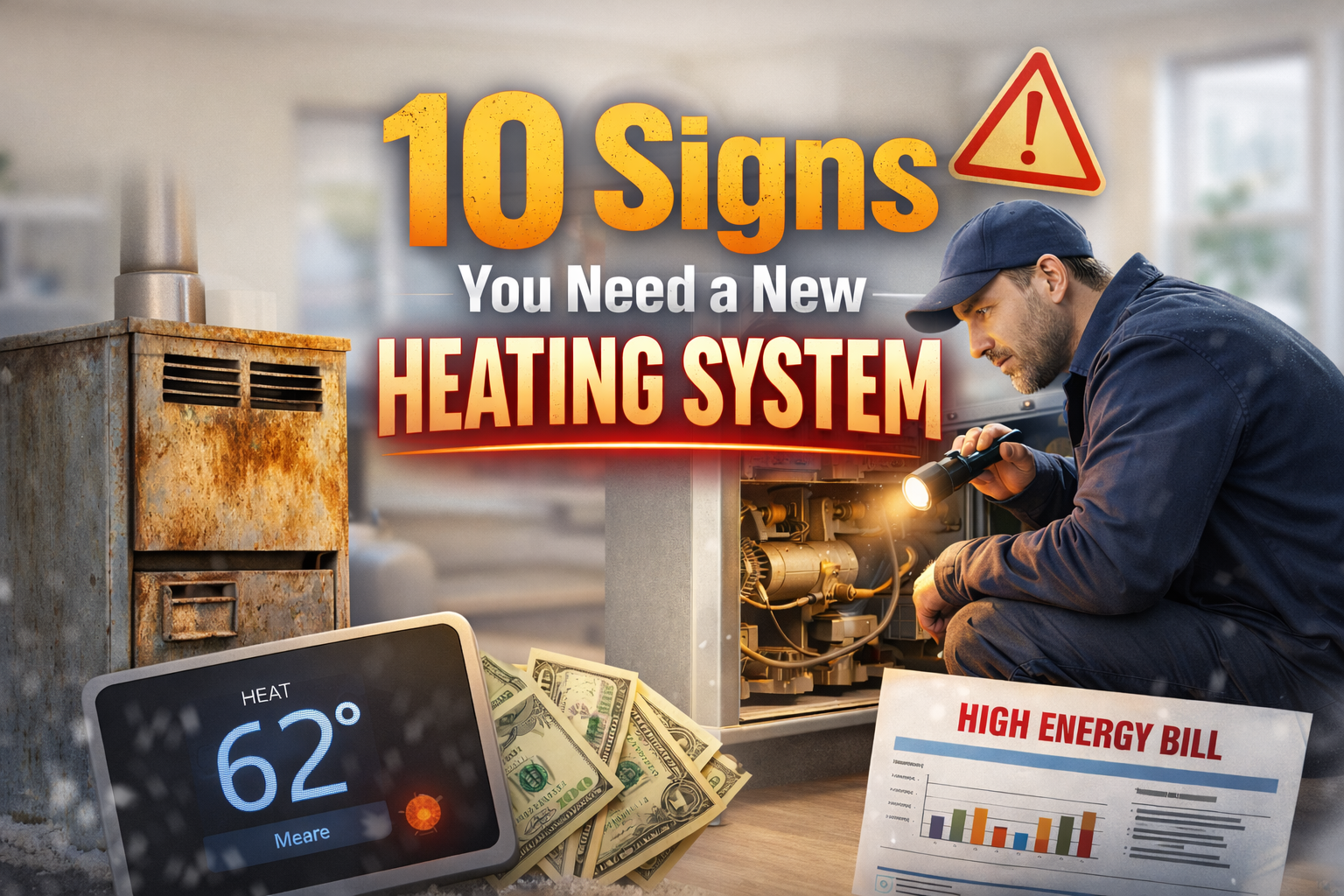
Your heating system won’t survive another brutal Connecticut winter if it’s cycling weirdly, making scary noises, spiking your bills, blowing cold air, showing rust or cracks, struggling with airflow, causing uneven heating/cooling across rooms, flashing error codes, smelling funky, or is just plain old, over 15 years. These are clear signs that replacement is imminent before a mid-January meltdown leaves you freezing. Chard and Son Heating & Air Conditioning spots these red flags early, keeping your home cosy even in the harshest of winters.
Does your heating system need frequent repairs?
One or two repairs in a season can be normal for an ageing system, but repeated breakdowns are not.
If you’re calling for service every few weeks for issues like ignition failures, fan malfunctions, or random shutdowns, the internal wear and tear is likely accelerating. Systems that require frequent fixes are closer to major failure than you think, and repair costs can quickly surpass value.
How old is your heating system?
Like all machines, heating systems have a finite lifespan. In Connecticut, where our winters force systems to run hard for five or six months straight, that lifespan is tested annually.
Most forced-air furnaces are designed to last between 15 and 20 years. Cast iron boilers might push 20 to 30 years if maintained perfectly. However, just because it turns on doesn’t mean it’s safe or efficient. If your system is old enough to drive a car, you should plan for its retirement now rather than waiting for it to die unexpectedly.
Strange Noises Rattling Around?
Banging booms mean delayed ignition, which can damage the heat exchanger, due to which the CO risk skyrockets. If you hear squeals, it signals belt wear. Grinding noises scream motor death. When the rattles are ignored, duct cracks worsen. So, remember, quiet operation is healthy, and any weird noises need to be checked immediately.
Are your energy bills climbing?
Have you looked at your fuel usage compared to last year? We aren’t just talking about the rising cost of oil or gas; we are talking about consumption.
As heating systems age, parts wear out, and internal components become dirty or corroded. The system has to work harder and run longer to produce the same amount of heat. If your thermostat habits haven’t changed but your energy bill has spiked significantly, your system is losing efficiency. It’s essentially burning money to compensate for its age.
Furnace Short Cycling Often?
That on-off-on dance every few minutes? It’s not efficiency, it’s desperation. Healthy furnaces hum steadily for 10-20 minutes per cycle, letting heat build fully before resting.
Short bursts overwork the blower motor and stress the heat exchanger, slashing lifespan by half and hiking energy use 30%. In CT’s long, cold spells, this burnout accelerates fast.
Blame dirty coils, faulty limit switches, or undersizing for your home’s load. Our technicians recalibrate or clean in one visit, restoring rhythm before parts snap.
Visible Rust or Cracks Showing?
Flaky orange rust on the cabinet or vents? Condensation from high-efficiency units eats ungalvanized steel, especially in damp CT basements.
Do you see cracks in the exchanger? Deadly, fumes mix with air, and the Environmental Protection Agency (EPA) notes 400 CO deaths yearly. White soot streaks signal combustion woes, too.
Is the pilot light yellow or flickering?
For systems with a standing pilot light, color matters.
A healthy flame should be blue. A yellow or flickering flame often indicates combustion problems, including dirty burners or even dangerous carbon monoxide formation. Any hint of combustion irregularity should prompt urgent evaluation before winter arrives.
Is the air quality dropping?
If your house feels dusty immediately after you clean, or if the air feels excessively dry or “stuffy” whenever the heat is on, your system might be the culprit.
Old systems often struggle to provide humidity control and can circulate dust, rust particles, and other allergens. If you notice a persistent burning smell or a musty odor that doesn’t go away after the first run of the season, it’s a sign that the internal components are deteriorating.
Key Takeaways
The most reliable sign that your heating system is failing is a combination of age (over 15 years) and inconsistency (strange noises, uneven heating, or short cycling). If your energy bills are rising despite normal usage, or if the flame on your gas unit is yellow instead of blue, you are at risk of a breakdown or a safety hazard. Taking action now to replace or extensively repair the unit is always cheaper and safer than an emergency replacement in the dead of winter.
Don’t wait until the heat goes out on the coldest night of the year.
If you recognize any of these warning signs, contact Chard & Son today for a professional assessment. Let us help you avoid emergency repairs and ensure your home stays warm, safe, and efficient all winter long.